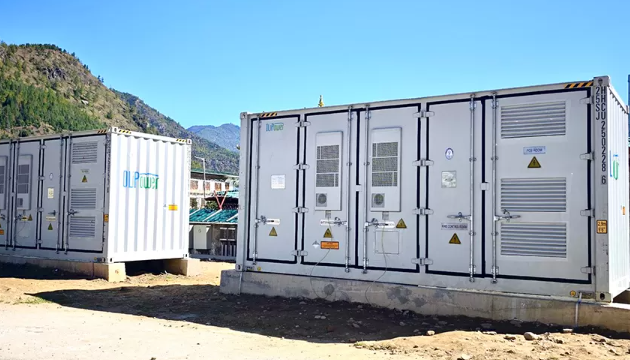
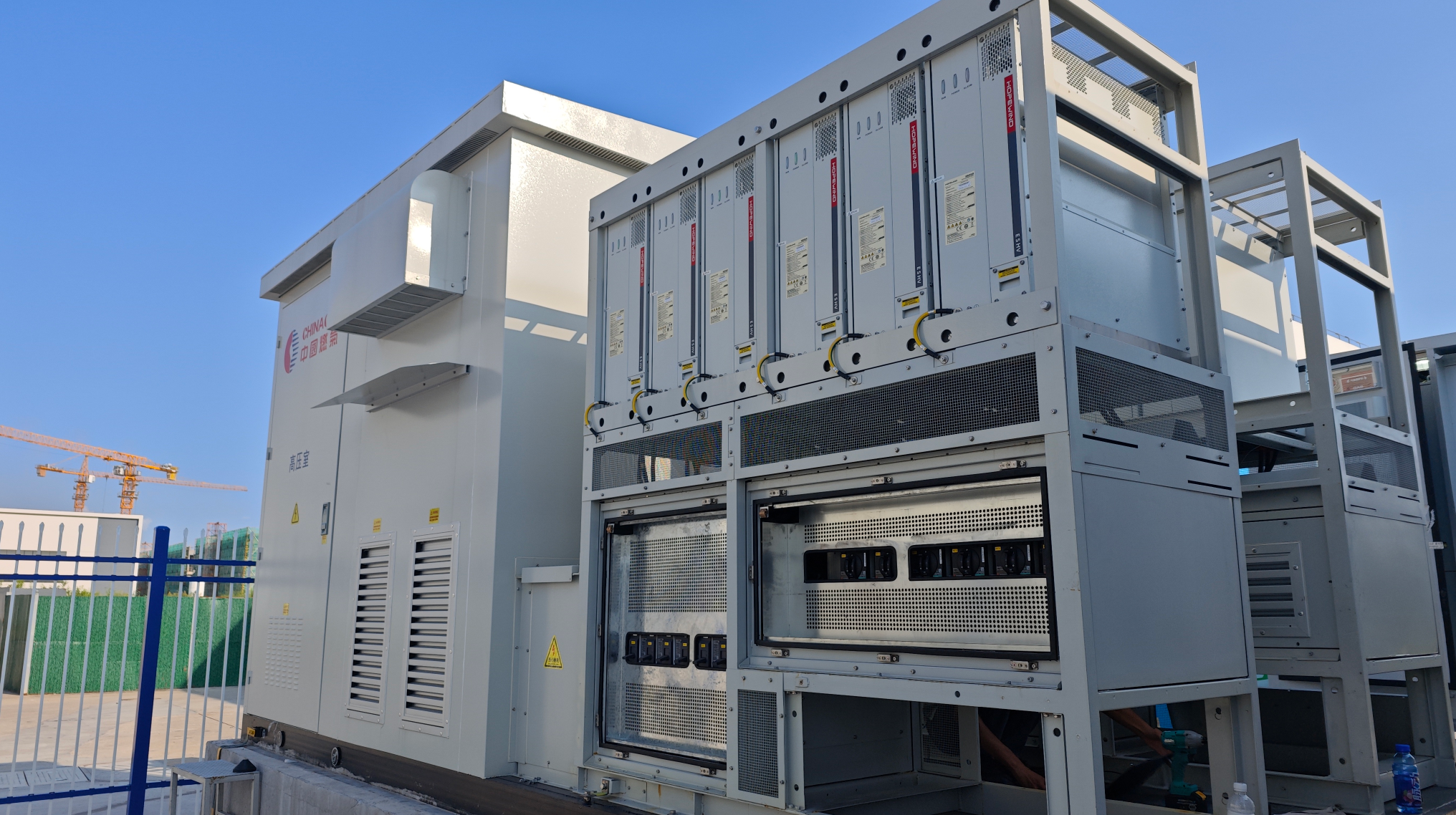
When solar PV and battery storage are installed at the same site, one of the first design decisions is whether the battery should be coupled on the AC side or the DC side.
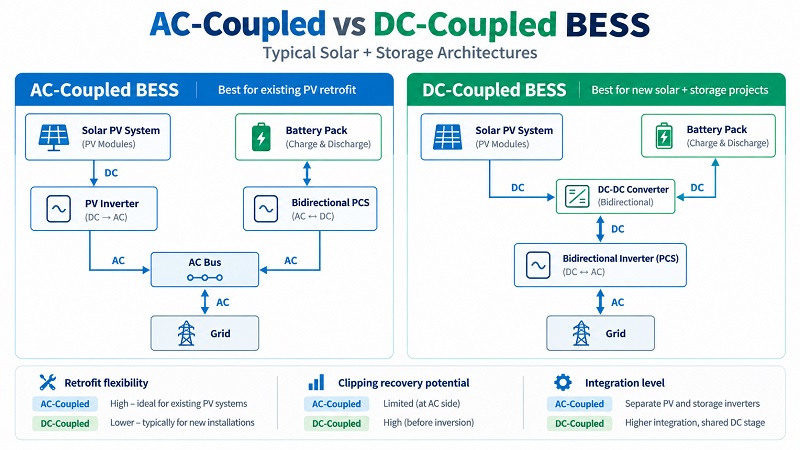
An AC-coupled BESS uses a separate power conversion path for the battery and connects it to the AC electrical system alongside the PV inverter. A DC-coupled BESS integrates the battery with the PV system on the DC side before electricity is converted for AC loads or the grid.
Neither architecture is better in every project. AC coupling is often practical when storage is being added to an existing solar installation. DC coupling is particularly useful when PV and storage are designed together, or when there is a real opportunity to store solar generation that would otherwise be clipped by the PV inverter.
The right choice therefore depends on the project itself: whether the PV system already exists, how the inverter is sized, when the battery will charge, how much solar energy is available, grid connection limits, backup requirements and future expansion plans.
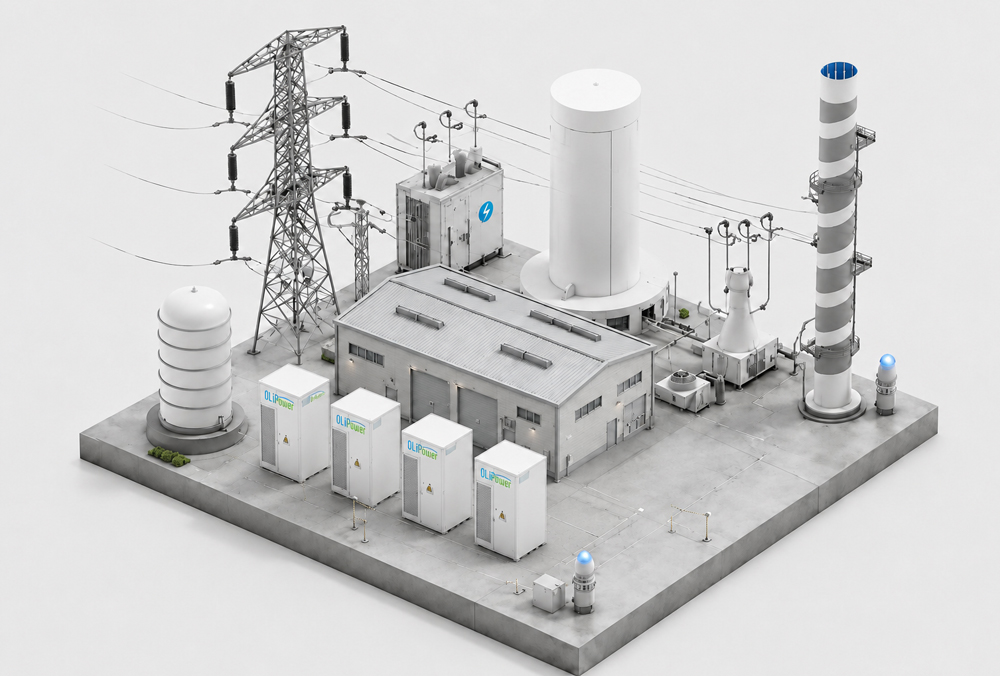
The coupling method changes how electricity moves between the PV array, battery, load and grid. In practice, this affects three important areas: conversion losses, the use of excess solar generation, and system integration.
Solar panels and batteries both operate with direct current, while most commercial electrical systems and utility grids use alternating current.
In a typical AC-coupled installation, solar electricity is first converted to AC by the PV inverter. If that electricity is then stored in the battery, the battery PCS converts it back to DC for charging. When the battery later supplies an AC load, another conversion takes place.
A DC-coupled system can store solar electricity before the main conversion to AC, so solar-to-battery charging can involve fewer conversion stages.
For example, if two conversion stages each operated at 97% efficiency, their combined efficiency would be about 94.1%:
97% × 97% = 94.1%
This is only an illustration. Actual system efficiency depends on the efficiency curves of the inverter or PCS, DC-DC converter, battery, transformer and auxiliary equipment, as well as the operating load.
For project comparison, use the efficiency data of the equipment being proposed rather than assuming a fixed efficiency advantage based only on the coupling architecture.
One of the most discussed advantages of DC coupling is the ability to capture some solar generation that would otherwise be clipped by the PV inverter.
PV arrays are often designed with more DC module capacity than the inverter's rated AC output. During periods of high irradiance, available PV power may temporarily exceed what the inverter can convert. The inverter then limits output, and the excess generation is referred to as clipped energy.
A properly designed DC-coupled battery can potentially store part of this excess before it reaches the inverter limit.
However, this benefit should be calculated rather than assumed.
In its 2024 utility-scale PV-plus-battery model, NREL used a representative system with a 134 MWdc PV array, 78 MWdc battery component and shared 100 MWac inverter, giving the PV system an inverter loading ratio of 1.34. For a representative PV system around an ILR of 1.3, NREL found clipping equivalent to only around 0.0% to 0.5% of annual DC generation across most of the contiguous United States.
NREL also notes that the potential becomes greater as the PV array is increasingly oversized relative to the inverter. In its higher-ILR scenario, an ILR of 1.7 can produce a larger benefit, although the result depends on location, grid charging and other operating assumptions.
The practical lesson is simple: do not select DC coupling only because it can recover clipped energy. First determine how much clipping the proposed PV system is actually expected to experience.
Coupling architecture also affects how independently the solar and battery systems can be designed and operated.
With AC coupling, the PV inverter and battery PCS remain relatively independent. This is useful when an existing PV system is already operating and the owner does not want to redesign the solar DC side.
With DC coupling, PV generation, battery charging and power conversion are more closely integrated. This can create advantages in a new solar-plus-storage system, but voltage ranges, inverter capacity, MPPT configuration, battery charging power and controls need to be engineered together.
The U.S. Department of Energy likewise distinguishes AC- and DC-coupled solar-plus-storage systems by how the PV and battery are connected and notes that both technical performance and cost should be considered when choosing between them.
The most useful way to compare the two architectures is not to ask which one is universally better, but to look at what changes at project level.
| Factor | AC-Coupled BESS | DC-Coupled BESS |
| Connection | Battery and PV meet on the AC side | Battery and PV are integrated on the DC side |
| Power conversion equipment | PV inverter and battery PCS are typically separate | PV and battery may share an integrated or hybrid conversion platform |
| Existing PV retrofit | Usually easier to add without redesigning the PV DC side | More modification may be required |
| New solar + storage project | Suitable | Well suited to integrated system design |
| Solar-to-battery conversion | Normally includes additional AC/DC conversion | Can reduce conversion stages during direct PV charging |
| Inverter clipping recovery | Energy already clipped by the PV inverter is generally unavailable | Can potentially store otherwise clipped DC solar energy |
| PV and battery independence | Higher | More closely integrated |
| Expansion | PV and storage can often be changed more independently | Expansion must account for shared DC and conversion equipment |
| System control | Coordination mainly occurs through PCS/EMS on the AC system | PV, battery and conversion controls are more tightly coordinated |
| Typical project fit | Existing PV retrofit, flexible storage addition | New solar + storage, integrated hybrid systems |
Suppose a factory already has a functioning 500 kW PV system. Replacing or substantially modifying that equipment only to remove one conversion stage may not create enough energy savings to justify the retrofit cost.
A new project is different. When the PV array and BESS are being engineered at the same time, the designer has more freedom to optimize battery capacity, solar DC capacity, inverter rating and operating strategy together.
The correct comparison is therefore based on whole-system cost, usable energy, operating flexibility and project objectives, rather than simply counting power conversion stages.
AC coupling often makes the most sense when the solar installation already exists.
A factory, warehouse or commercial building may already operate a rooftop PV system with working solar inverters. If the owner later adds a BESS for peak shaving, load shifting, solar self-consumption or backup power, an AC-coupled design can usually leave much of the existing PV equipment unchanged.
The new battery system is integrated into the site's AC electrical infrastructure instead of requiring major changes to the solar DC system.
This is the strongest case for AC coupling.
When PV modules, cabling and inverters are already commissioned, retaining them can reduce the scope of the storage retrofit. The BESS can instead be designed around the site's switchgear, transformer capacity, loads and point of interconnection.
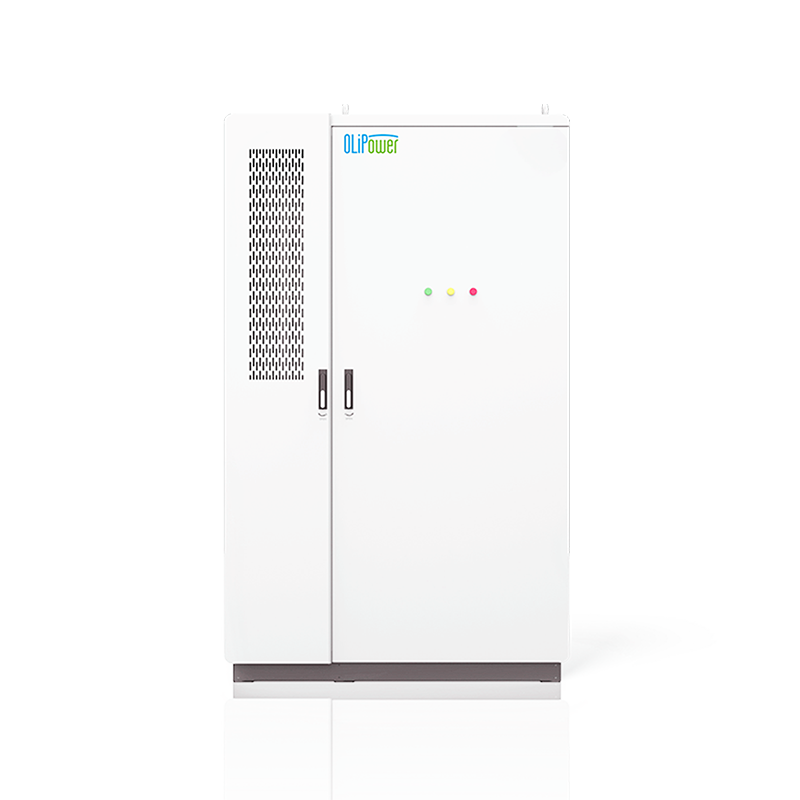
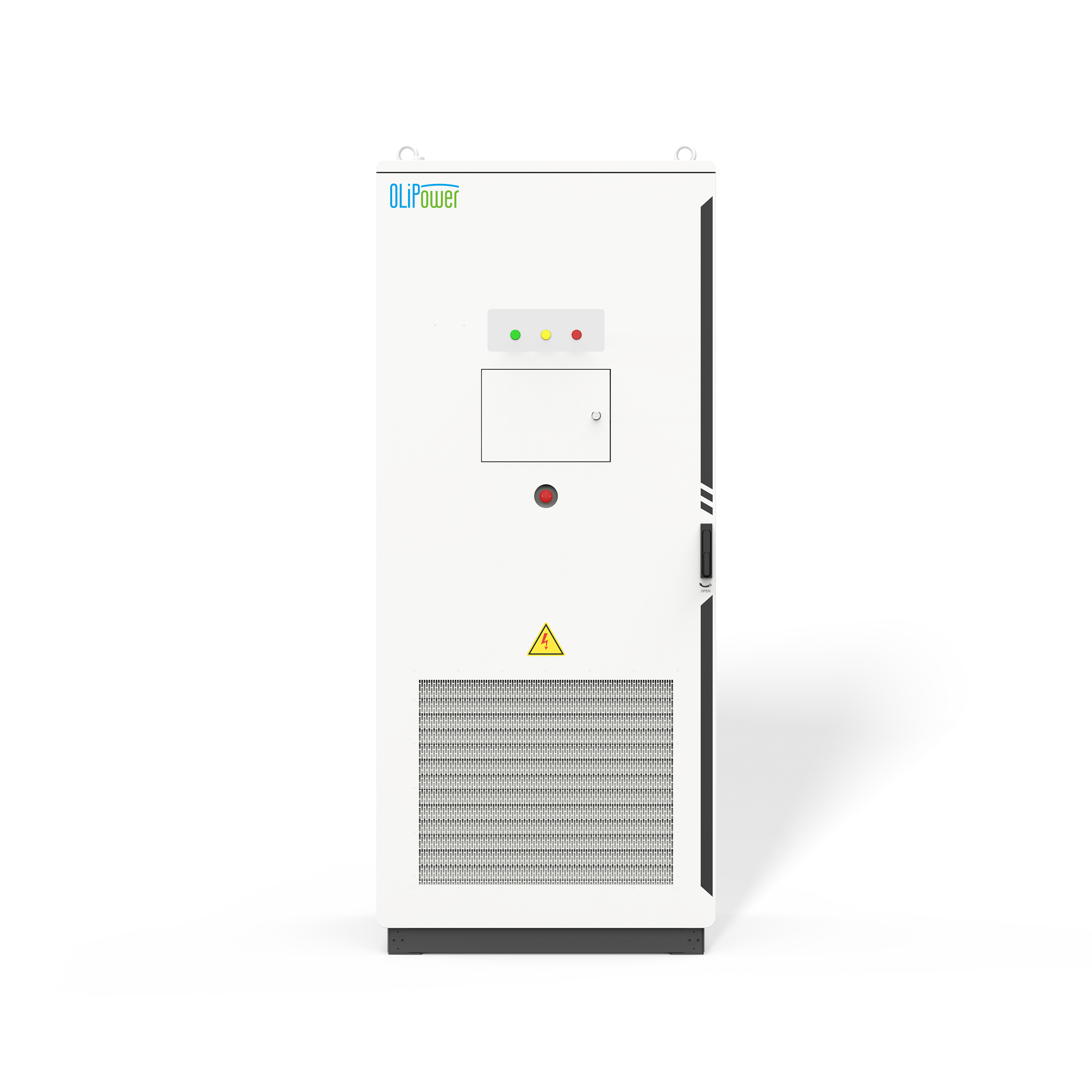
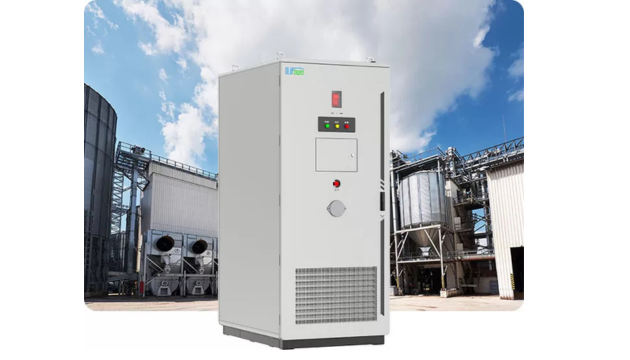
For commercial and industrial applications, OLiPower's c&i battery storage solutions are designed around applications such as peak shaving, backup power and renewable energy integration.
The actual coupling method can then be selected according to the site's existing electrical conditions rather than forcing the PV system into a new architecture.
AC coupling also makes sense when the owner wants the PV and battery systems to remain relatively independent.
For example, a site may install storage today but expand the PV system several years later. Another project may increase battery capacity as electricity tariffs, production schedules or peak demand change.
Separate solar and battery conversion systems can make these changes easier to manage, although transformer loading, switchgear capacity and grid connection limits still have to be checked.
Not every BESS is installed simply to store midday solar generation.
A C&I battery may also charge from the grid during lower-price periods and discharge during high-tariff hours. It may be used for peak demand control, backup power or other operating strategies.
In these cases, the ability to capture clipped PV energy may have relatively little influence on project economics. The flexibility of the AC-connected storage system can matter more.
If the existing PV inverter rarely reaches its power limit, there may be little clipped energy available to recover.
This is why historical PV generation data can be particularly valuable before changing an existing system architecture. If inverter output is rarely constrained, a theoretical clipping advantage should not drive the investment decision.
AC coupling still needs proper engineering. The addition of a BESS can affect transformer loading, protection settings, export control, switchgear capacity and the site's maximum import or export power.
DC coupling becomes more attractive when the solar array and battery can be designed together from the beginning.
Rather than treating the PV plant and BESS as two independent systems, the engineering team can optimize solar capacity, battery charging power, inverter rating and operating strategy as one integrated design.
A new-build project does not have an existing PV inverter that must be preserved. This gives the designer greater freedom to select an integrated architecture.
For example, the project can evaluate how much daytime PV should supply the load directly, how much should charge the battery, how much battery discharge is required after sunset, and how the shared power conversion equipment should be sized.
For projects requiring this type of PV-storage integration, OLiPower's hybrid grid solar system includes integrated cabinet and container configurations for solar, storage and microgrid applications.
DC coupling deserves closer consideration when the PV array is intentionally oversized relative to the inverter and the project model predicts meaningful periods of clipping.
In this situation, the battery can provide another destination for solar generation before the inverter limit is reached.
But three conditions still have to be satisfied.
First, the battery needs available state-of-charge capacity when the clipping occurs. Second, its permitted charging power must be high enough to accept that energy. Third, the DC conversion equipment and controls must support the required power flow.
If the battery is already full by the time peak solar generation occurs, the theoretical clipping-recovery benefit disappears.
A DC-coupled configuration can also be useful when one of the main project goals is to store daytime solar generation for later on-site consumption.
Reducing unnecessary conversion stages can improve the solar-to-battery energy path, while integrated control can coordinate PV production and battery charging.
Again, this does not guarantee better overall project economics. The engineering comparison should include inverter and DC-DC conversion efficiency, battery losses, equipment cost, maintenance and the expected operating schedule.
Projects in weak-grid or off-grid locations often require tighter coordination between PV generation, battery storage, loads and other power sources.
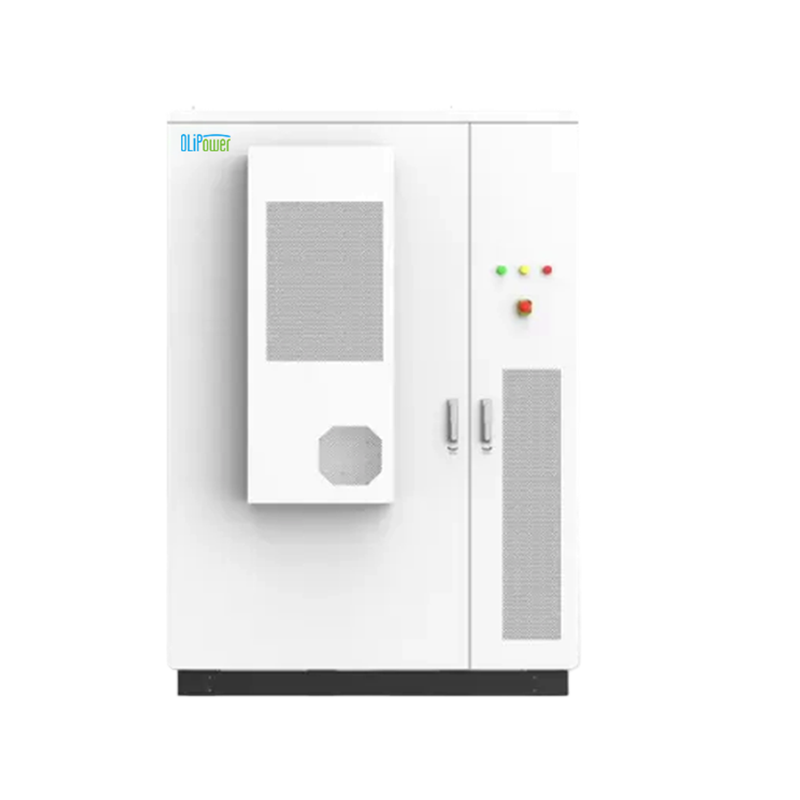
OLiPower's 125kW/241kWh hybrid ESS cabinet, for example, is designed for grid-connected and off-grid applications and supports switching between grid-connected and off-grid operation within 20 ms.
For projects where the battery system needs to be paired with an external PCS or hybrid inverter, the OLiPower DC battery storage cabinet currently includes 111 kWh, 112 kWh, 257 kWh, 261 kWh and 418 kWh cabinet options. The product range is designed for integration with different PCS and hybrid inverter platforms.
This is an important distinction: DC coupling does not necessarily mean that PV, battery and inverter must all be built into one cabinet.
What matters is how the components are electrically integrated and controlled.
Before finalizing a DC-coupled design, the project engineer should confirm the PV DC capacity, battery voltage range, battery charge and discharge power, inverter rating, MPPT operating range, grid connection capacity and expected solar generation profile.
It can be more efficient when solar electricity is charging the battery because DC coupling can avoid some AC/DC conversion stages. However, total system efficiency also depends on the inverter, DC-DC converter, battery, transformer, auxiliary consumption and operating load. The correct comparison should use actual equipment efficiency data.
Yes. This is one of the main applications for AC coupling. The existing PV system can usually continue operating through its current inverter while the BESS uses a separate PCS connected to the AC electrical system. Switchgear, protection, transformers and grid limits still need to be checked.
Yes, if the system is designed for it and the battery has enough charging power and available capacity at the time clipping occurs. The amount of recoverable energy depends on the PV array size, inverter rating, solar resource and battery operating schedule.
Yes. When the PCS, EMS and local grid rules permit it, an AC-coupled battery can receive energy through the site's AC system from either PV generation or the grid. This can support strategies such as peak shaving, tariff arbitrage and backup preparation.
No. Some systems use an integrated hybrid inverter, while others use separate DC-DC converters and a bidirectional inverter. The exact architecture depends on the PV voltage, battery voltage, system power and control requirements.
Start with the PV capacity, inverter rating, facility load profile, battery power requirement, battery capacity requirement, grid connection limit, backup load and expected charging strategy.
For an existing solar plant, historical PV production and inverter output data are also useful because they show whether clipping is actually significant. For a new project, the solar array, BESS and inverter should be sized together rather than selected independently.
AC-coupled and DC-coupled BESS architectures solve different project problems.
For an existing solar installation, AC coupling is often the more practical way to add battery storage while retaining the existing PV equipment. It also provides greater independence between the PV and storage systems.
For a new solar + storage project, DC coupling can provide closer integration between PV and the battery, reduce some solar-to-battery conversion losses and, where the system is appropriately sized, capture solar generation that would otherwise be clipped.
The final decision should not be made from architecture labels alone. PV generation, inverter capacity, load profile, battery power and energy capacity, grid restrictions, backup requirements and future expansion plans all need to be evaluated together.
For an OLiPower project, provide the existing or planned PV capacity, inverter information, load data, grid conditions, required BESS power and storage duration. These inputs make it possible to determine whether AC coupling, DC coupling or an integrated hybrid configuration is the better fit for the actual site.