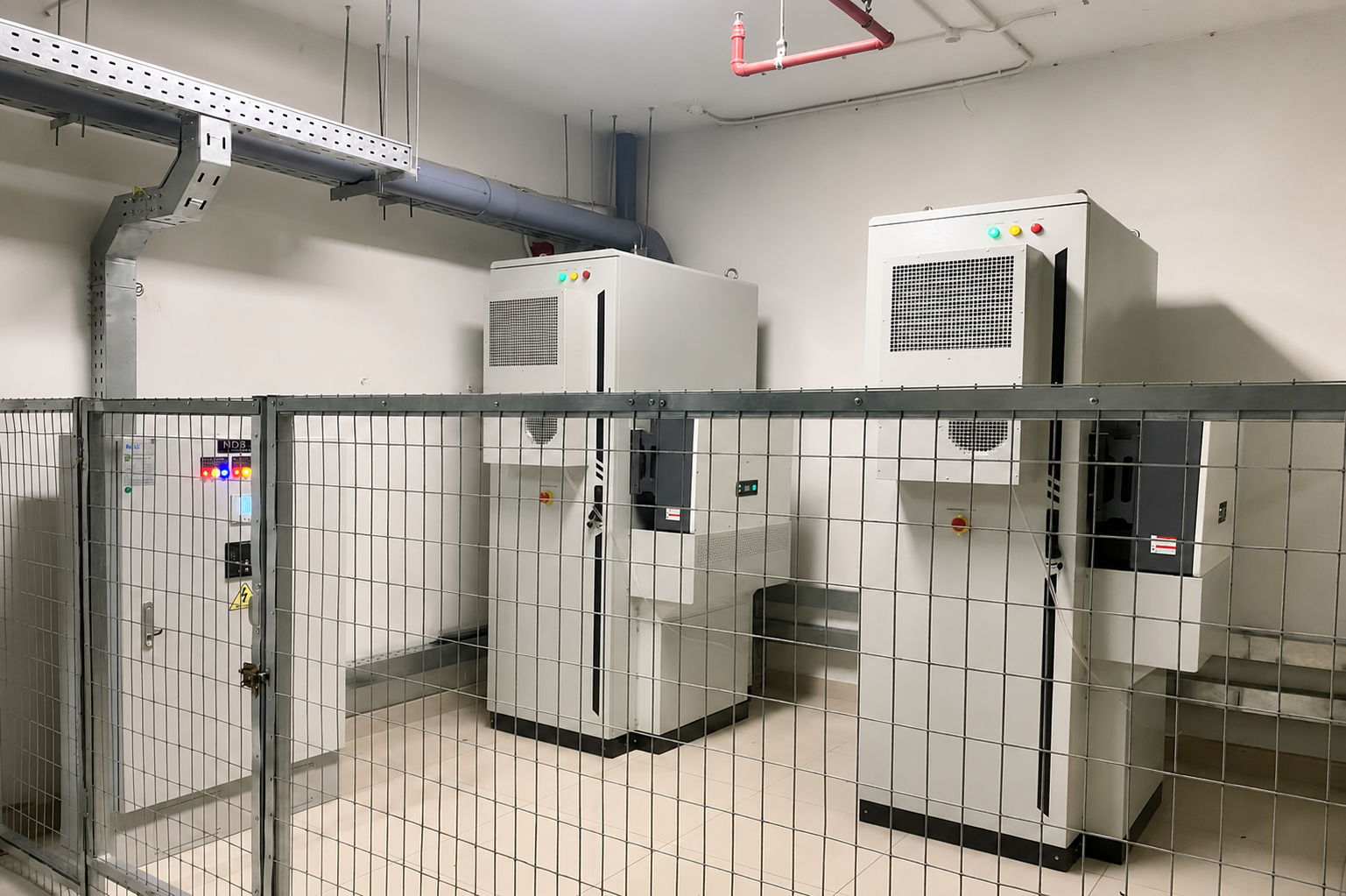
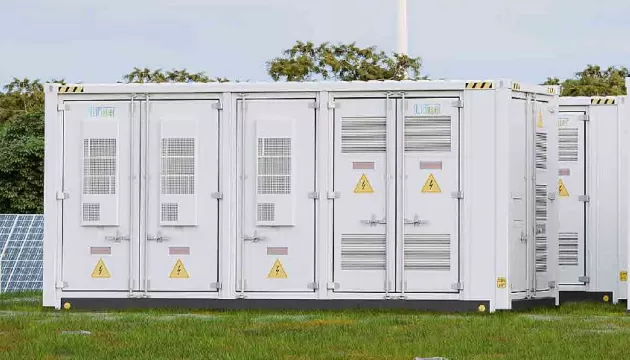
Selecting the right battery voltage architecture is one of the most important decisions when designing a commercial energy storage system (ESS). While low voltage battery systems have been widely used in smaller storage applications, high voltage battery systems are increasingly adopted in commercial and industrial projects due to their advantages in power transmission efficiency, scalability, and system integration.
However, higher voltage does not automatically mean better performance for every application.
This guide explains the differences between high voltage and low voltage battery systems and how to select the right architecture for commercial ESS projects.
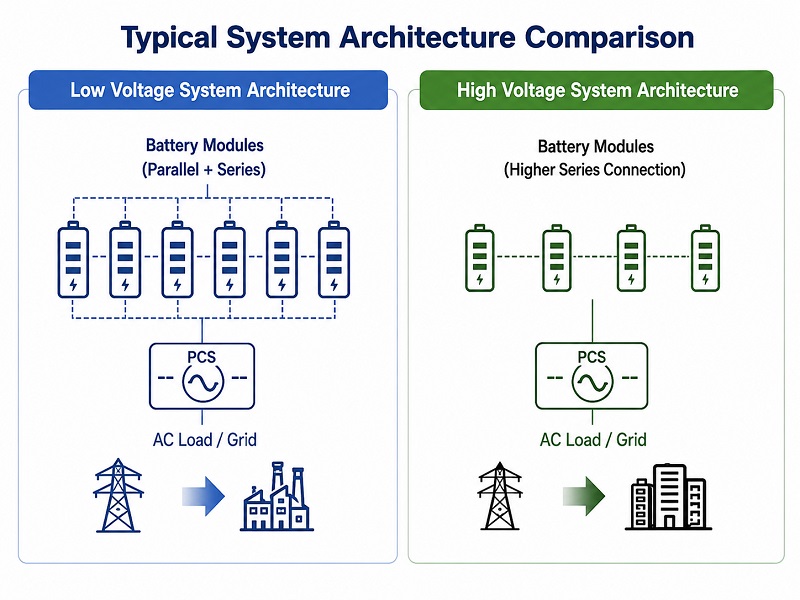
A battery voltage architecture refers to the operating voltage level of the battery system, including battery modules, racks, clusters, and their connection with PCS.
In an ESS project, battery voltage affects:
Current flow
Cable requirements
PCS selection
System efficiency
Scalability
Low voltage battery systems typically operate at lower DC voltage levels and are commonly used in:
Small commercial storage
Residential ESS
Backup power applications
Advantages include:
Simpler system design
Easier installation
Flexible configuration for smaller projects
High voltage battery systems increase the DC operating voltage by connecting more battery modules in series.
They are commonly used in:
Commercial and industrial ESS
Microgrids
Utility-scale BESS
Advantages include:
Lower current at the same power output
Reduced cable losses
Better scalability for large systems
For commercial ESS projects, battery voltage is closely related to system efficiency and design complexity.
The relationship between power, voltage, and current can be simplified as:
Higher voltage → Lower current → Reduced electrical losses
For larger energy storage systems, lower current helps reduce:
Cable size requirements
Heat generation
Electrical losses
Installation complexity
This is why many large-scale ESS projects move toward higher voltage architectures.
Factor | Low Voltage Battery System | High Voltage Battery System |
Typical Application | Small ESS, backup power | Commercial ESS, microgrid, utility BESS |
System Scale | Small to medium capacity | Medium to large capacity |
Current Level | Higher current at same power | Lower current at same power |
Cable Requirements | Larger conductor requirements | Reduced cable requirements |
PCS Matching | Suitable for smaller systems | Designed for higher power PCS integration |
Scalability | Limited for large expansion | Better for modular expansion |
Installation Complexity | Simpler for small projects | Better for large projects |
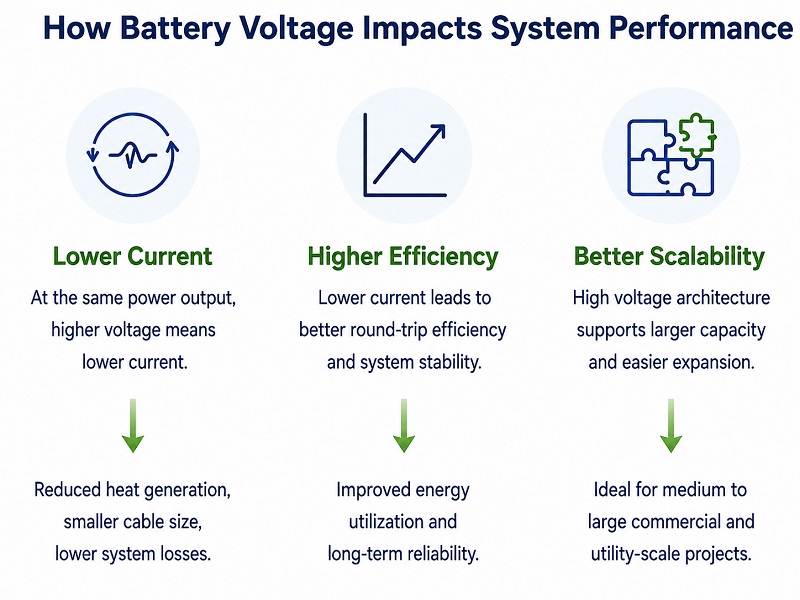
For the same power output:
Lower voltage systems require higher current.
Higher voltage systems reduce current requirements.
Lower current can help improve:
Energy conversion efficiency
Thermal performance
Long-term system reliability
For commercial projects operating thousands of charge and discharge cycles, even small efficiency improvements can influence lifetime operating costs.
As energy storage capacity increases, system architecture becomes more complex.
A 100kWh backup system and a multi-MWh BESS project have very different requirements.
High voltage architectures provide advantages in:
Battery rack integration
PCS matching
Containerized deployment
Future expansion
The correct voltage architecture depends on the project requirements rather than voltage level alone.
Project Type | Typical Application | Recommended Consideration |
Small commercial backup | Short-duration backup power | Lower voltage may provide simpler deployment |
C&I peak shaving | Factory, industrial park, EV charging | Medium/high voltage architecture improves efficiency |
Microgrid ESS | Renewable integration and backup supply | High voltage with advanced control capability |
Utility-scale BESS | Renewable energy storage and grid support | High voltage architecture is preferred |
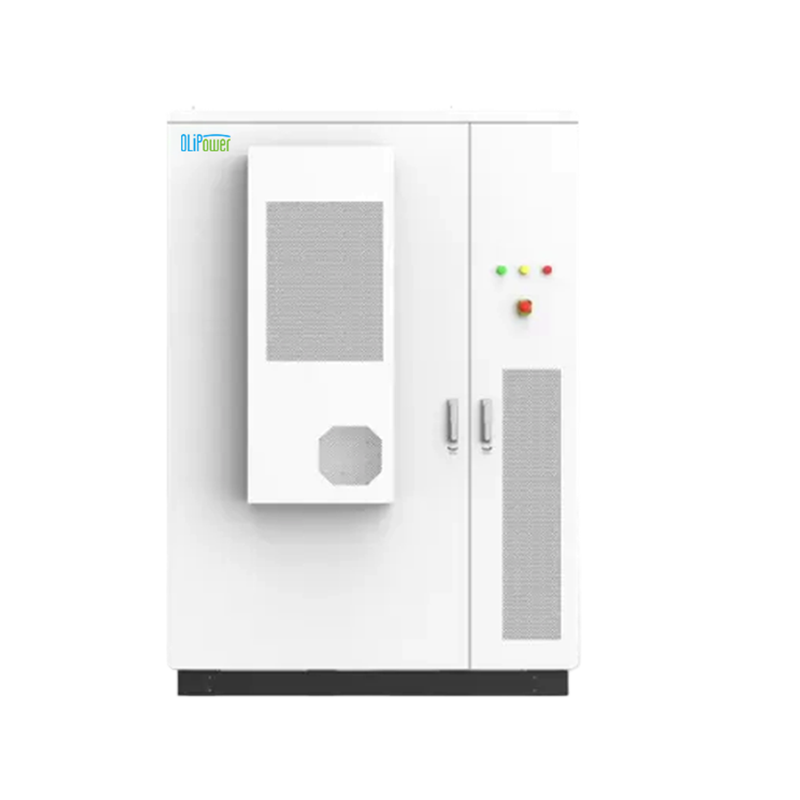
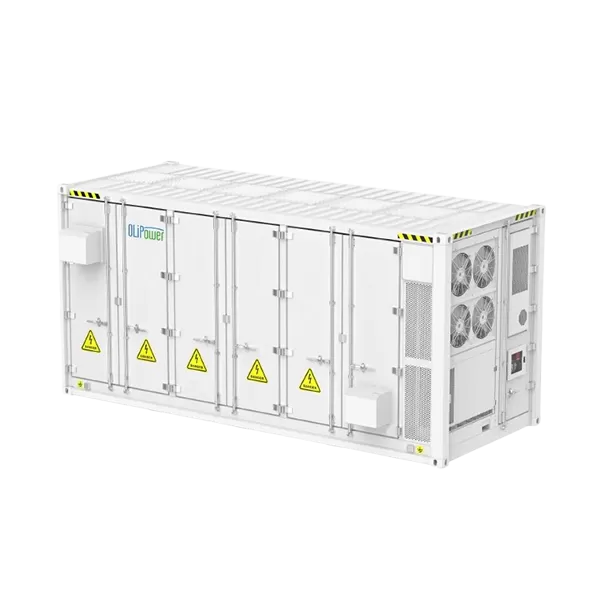
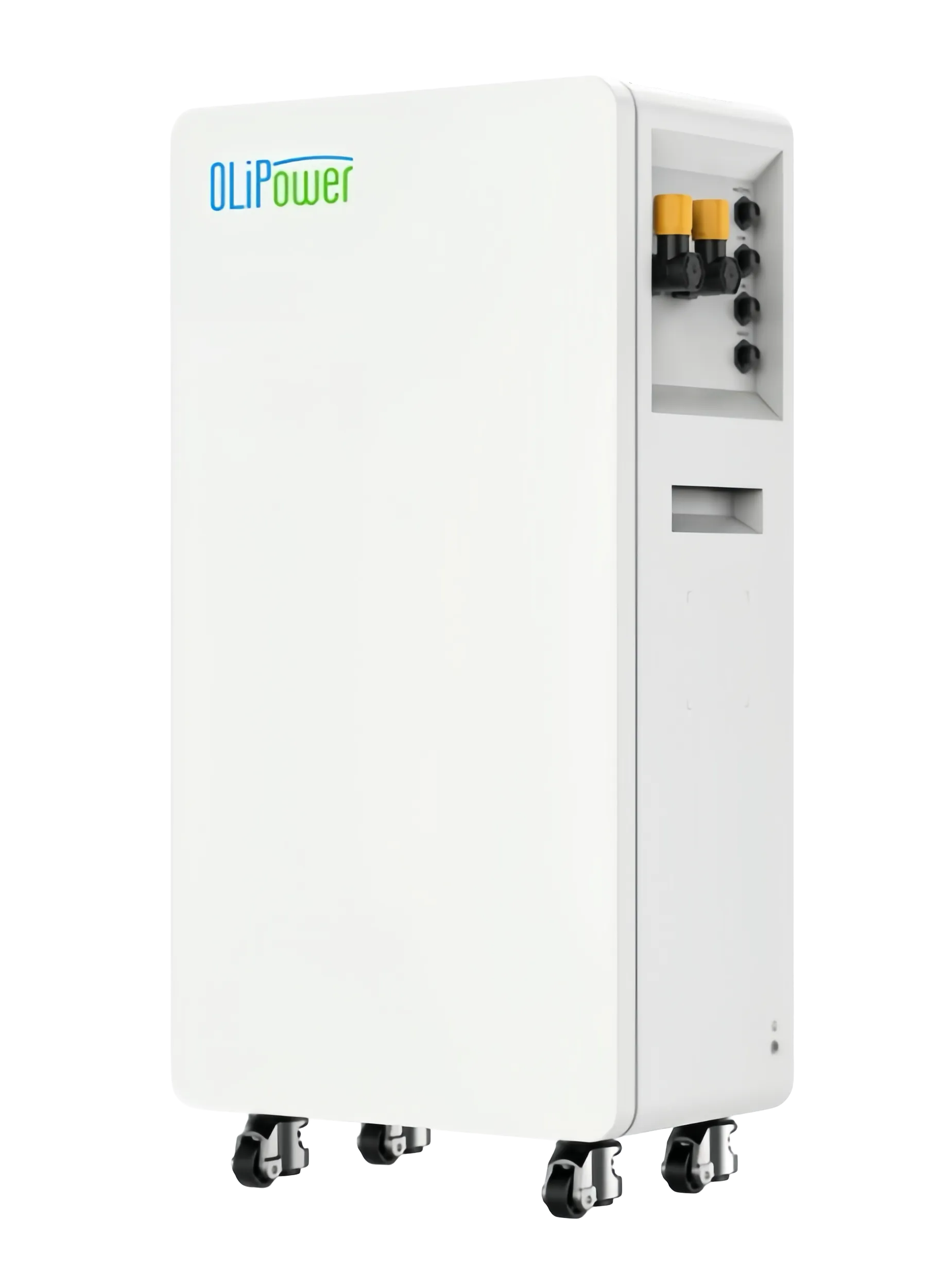
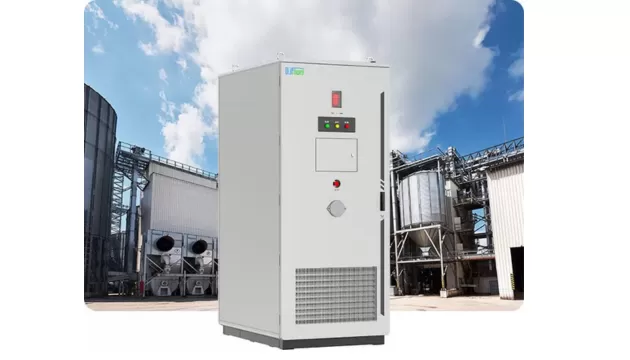
OLiPower designs different ESS products with voltage architectures matched to different application scenarios.
Designed for hybrid microgrid and backup applications.
The system uses:
LFP battery technology
540.96V rated voltage
470.4-613.2V operating voltage range
This architecture supports applications requiring:
Microgrid operation
Backup power
Renewable energy integration
Designed for commercial and industrial energy storage applications.
The system features:
832V rated voltage
728-949V voltage range
This voltage architecture supports:
Factory peak shaving
Demand management
Larger C&I ESS deployment
For larger commercial energy storage applications.
The system adopts:
1331.2V rated voltage
1164.8-1497.6V voltage range
Higher voltage architecture enables:
Large capacity deployment
Better system scalability
Integration with high-power ESS solutions
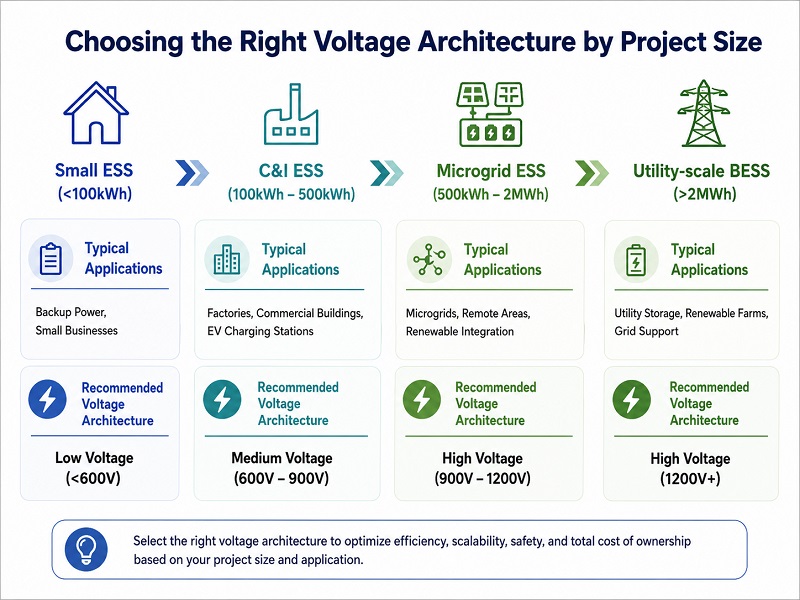
Battery voltage selection also affects project economics.
Cost Factor | Low Voltage System | High Voltage System |
Initial System Design | Usually simpler | More advanced architecture |
Cable Cost | Higher current may require larger cables | Lower current can reduce cable requirements |
Installation | Suitable for smaller systems | Optimized for larger projects |
Expansion Cost | May increase with system size | Better scalability |
For small-scale applications, simplicity may be the priority.
For commercial ESS projects requiring higher capacity and long-term expansion, high voltage architectures often provide better overall value.
Battery voltage and PCS selection must be considered together.
A PCS must support:
Battery DC voltage range
Required power output
Charging/discharging strategy
Grid connection requirements
For example:
A high voltage battery system requires a PCS designed for compatible DC input ranges.
Poor matching between battery voltage and PCS can lead to:
Reduced efficiency
Limited operating range
Lower system performance
This is why ESS suppliers with integrated battery and PCS design capabilities can provide better system optimization.
High voltage battery systems operate at higher DC voltage levels by connecting more battery modules in series, while low voltage systems use lower operating voltages and are typically applied in smaller energy storage projects.
High voltage systems can improve efficiency by reducing current requirements and minimizing electrical losses, especially in larger commercial and industrial ESS applications.
Yes. Low voltage batteries can be suitable for smaller commercial projects where simple installation and flexible configuration are important.
Large ESS projects require higher power output and larger capacity. High voltage architectures help reduce current, improve scalability, and simplify integration with high-power PCS systems.
PCS must match the battery DC voltage range. The correct voltage compatibility ensures stable charging, discharging, and efficient energy conversion.
The choice depends on project capacity, load requirements, expansion plans, and PCS configuration. Medium and large C&I projects often benefit from high voltage battery architectures, while smaller systems may use lower voltage solutions.
Choosing between high voltage and low voltage battery systems is not simply a matter of selecting the higher voltage option.
The right battery architecture depends on project scale, application requirements, PCS compatibility, efficiency goals, and future expansion needs.
For commercial and industrial energy storage projects, high voltage battery systems are increasingly becoming the preferred choice because they support larger capacities, improved efficiency, and scalable system design.
With different ESS architectures ranging from hybrid microgrid systems to commercial cabinets and utility-scale solutions, OLiPower provides integrated energy storage solutions designed for diverse power applications.
By selecting the right battery voltage architecture, businesses and energy developers can build safer, more efficient, and more scalable energy storage systems for the future.